

The Journey
From spark of innovation to global transformation
Where it all began
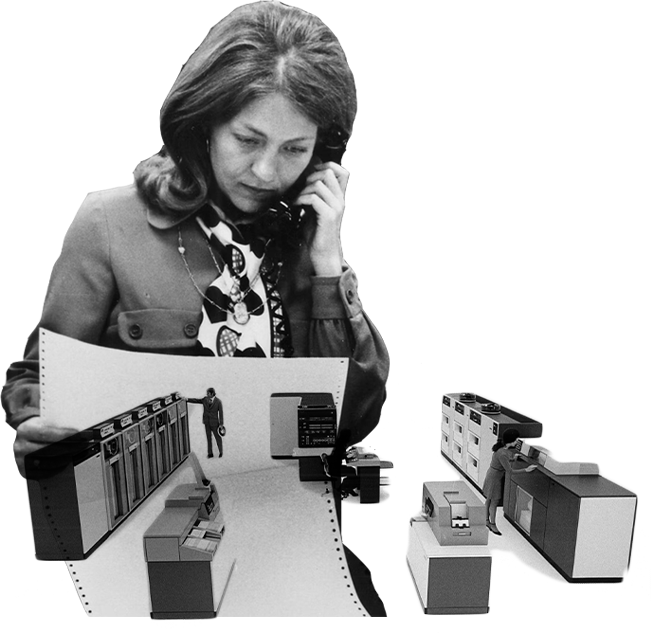
In early 1980, Manny Perez had been working at the Exxon Corporation for ten years and then went to work at the Supply and Transportation department of Exxon International Company in New York.
This department was in charge of moving all Exxon oil supplies around the world. Operations were executed and controlled through an interactive system based on IBM’s IMS that kept track of ships and cargo.
As an adjunct, a planning system had been installed to help the planning groups develop their monthly and quarterly supply plans. This system was limited in functionality and very expensive to run.

It started with a simple idea
The original spark for TM1 came not from Manny but from a person in the IT department, Lilly Whaley.
Lilly suggested developing a planning system using the IBM mainframe time-sharing option (TSO) to replace the IMS system and thereby significantly reduce running costs.
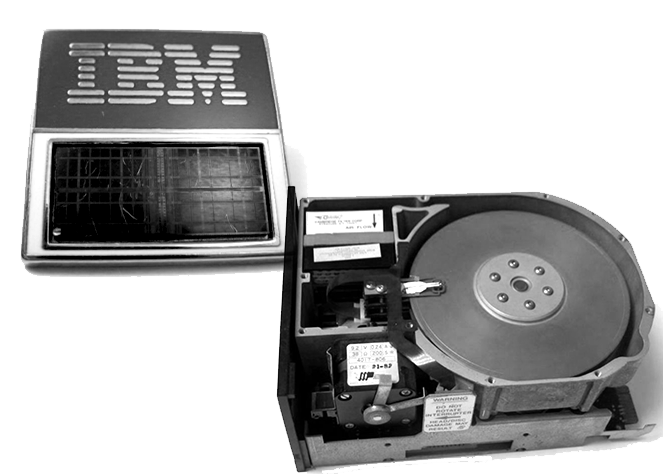
Manny, being a hacker at heart, took it upon himself to develop a prototype. Right away he realized that in order to provide the multidimensionality and interactivity needed, it was necessary to keep the data structures in computer memory rather than on disk.
RAM or Hard Disk?
RAM or Hard Disk?
This gave rise to a debate that would surround TM1 for years to come. Lilly and the IT department insisted that the system should be developed using a disk-based database system. Fortunately, Manny’s management supported his recommendation to hold the data in RAM instead. The new system was installed and went into successful operation in 1981.
A really good idea, actually
The business potential of the planning system Manny had developed became immediately apparent and he began to explore the possibilities of commercializing it.
Back in early 1981, the IBM personal computer had not yet been announced and the Apple II® was not in significant use at corporations. Initially, Manny looked to implement it on a public mainframe timesharing system.
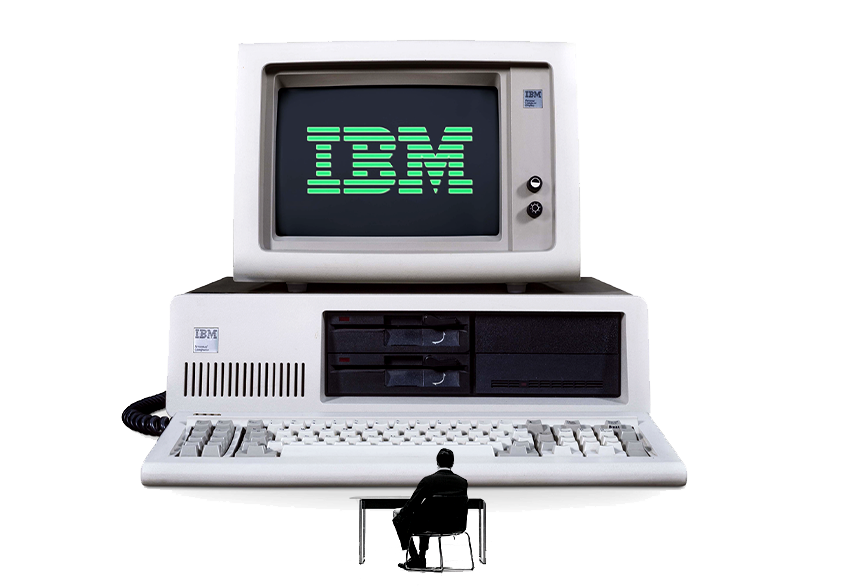
Just in time, the IBM personal computer was announced. It provided a low-cost development environment that Manny was quick to take advantage of.
The spreadsheet as the best interface ever
Shortly after, he saw the electronic spreadsheet VisiCalc® and became convinced that it was the ideal user interface for his visionary product: the Functional Database.
Manny’s idea was to integrate a multidimensional database into a spreadsheet, essentially individually connecting the cells in the database to the cells in the spreadsheet. This created a high-performing, scalable and intuitive user experience that far exceeded what a spreadsheet could do by itself for financial reporting, budgeting and forecasting.

The start of a revolution
Manny bought himself an IBM PC with 256kb of memory and two floppy drives, parked it in his attic, and began feverishly developing his vision after-hours.
By the summer of 1983, he had a working prototype and decided to leave Exxon to devote himself full-time to developing the Functional Database business.
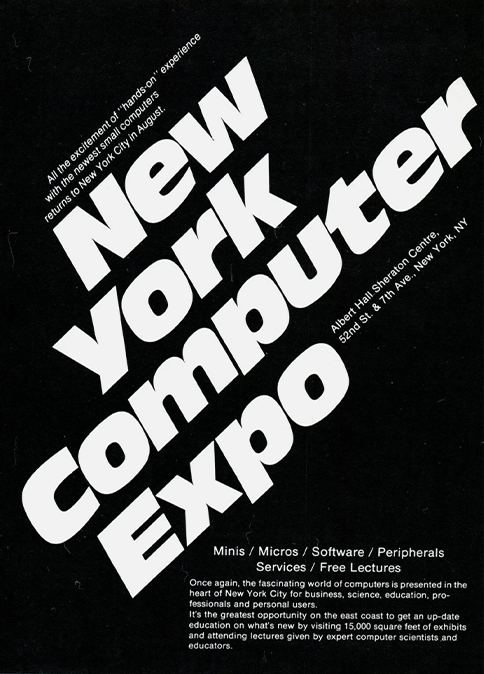
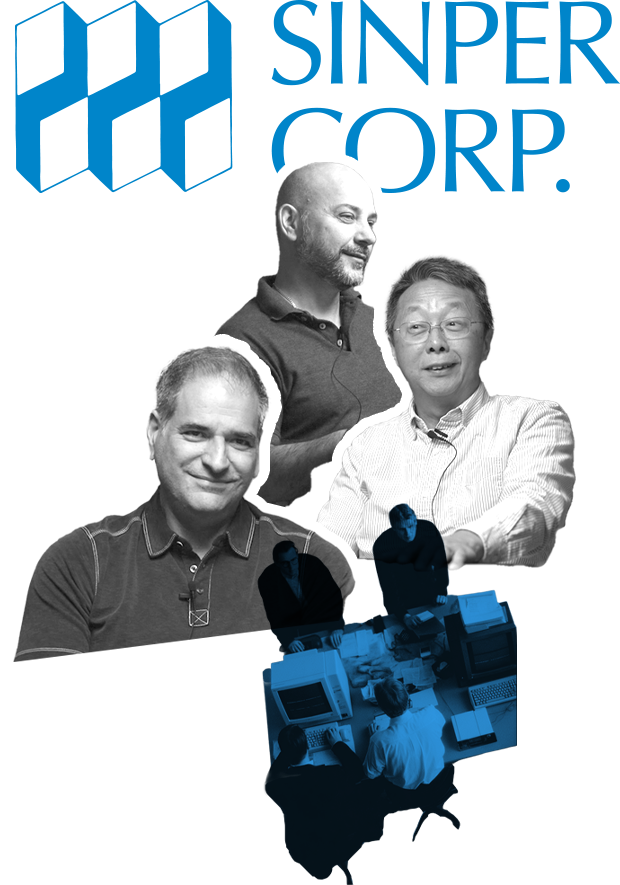
He and his former colleague and friend, Jose Sinai, raised money through a private placement and formed Sinper Corporation in early 1983. That summer, TM1 – the first-ever Functional Database – was announced at the PC Expo conference in New York.
A false start and the birth of the TM1 champions
As with most entrepreneurs, Manny expected that TM1 would become an instant success and his main fear was one of competition from larger players.
The reality was very different.
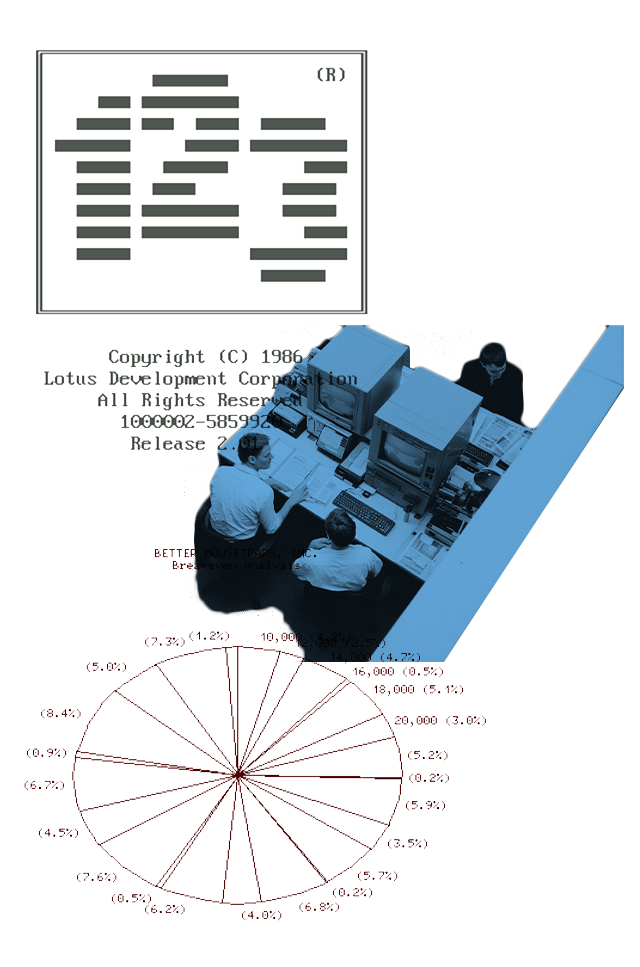
The general public received TM1 with an overwhelming yawn of disinterest. The main hurdles were that the concept itself was far from obvious and that it used a proprietary spreadsheet different from the ‘standard’ which, at that time, was Lotus® 1-2-3.
What was encouraging was that the small minority who grasped the concept became instant fanatics. This included several individuals high up in large companies who became champions. These champions typically were in finance or other user departments and quickly encountered the same resistance from IT that Manny had experienced at Exxon.

A slow start and the rise and fall of potential competitors
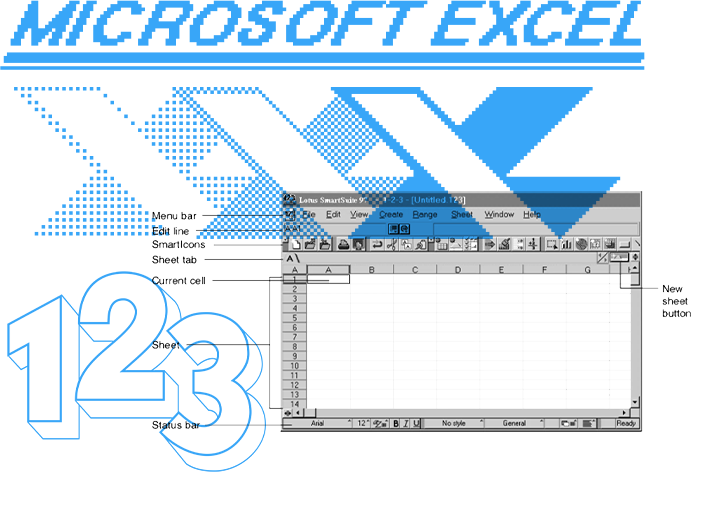
The level of business, however, was low and growing glacially until a client/server version of TM1 was developed. This allowed using Lotus 1-2-3 and Microsoft Excel® as clients and, as a result of this, the growth rate increased significantly, but still remained at a fairly low level for years.
In the meantime, several potential competitors came – but just as quickly went.
Users driving development
During the years of slow growth and the absence of significant competition, the incredibly loyal user base continued to expand its use and push the possibilities of the product.
Most, if not all, major and minor improvements in the product, such as server architecture, rules, Turbo Integrator, security, hyper sparsity, etc., came as a result of this user experience and demand.
From this experience, Manny presents the secret of TM1 in the form of a cycle: 1. Envision a reasonably simple but highly functional product. 2. Incorporate current state-of-the-art computing technologies. 3. Let users put the product to use and push the limits of applicability. 4. Listen to users’ new needs. Extrapolate and anticipate future requirements. 5. Incorporate additional features that are elegantly simple and complete. 6. Go to Step 2 and repeat the cycle for 30+ years
This approach is what has made TM1 such a pragmatic, valuable tool to this day – and one that continues to inspire new product champions and fanatics around the world.
From TM1 software (AKA Sinper) to Applix
In 1996, Sinper (by then calling itself TM1 Software) was purchased by Applix.
During the Applix years, TM1 saw continued organic growth despite Applix itself having a turbulent time. New features such as TM1 Web were added that allowed business users to easily create applications in spreadsheets, but now deploy them to a broader set of users via the web.
Starting in the early 2000s, 64-bit computing started to become mainstream, making TM1 vastly more scalable. The price of memory also plummeted, making TM1 far more affordable to run. Suddenly the technical limits of disk-reliant solutions such as Cognos Planning and Hyperion Essbase were badly exposed and TM1 was able to outperform and out scale them by orders of magnitude, while still maintaining its advantage of great flexibility.
From Applix, to Cognos, to IBM
In late 2007, Cognos purchased Applix and IBM subsequently purchased Cognos four months later.
Manny liked to say that the major limitation on TM1 was size – not the size of the cubes, dimensions or the applications it could implement, but the size of the company that sold it.
That limitation disappeared overnight. For the first time, TM1 had one of the top international brands associated with it and a global network through which it could be distributed.
Further, IBM recognized the asset they had purchased in TM1 and got to work with its large R&D team. They added massive scalability improvements, including Parallel Interaction and Multi-threaded Query mode, which have allowed TM1 models to scale up for use by thousands of users and stay a generation ahead of its competitors.

Growing, thriving and becoming accepted worldwide as de-facto planning platform
Needless to say, TM1 has continued to grow and thrive under IBM and create a new generation of TM1 fanatics.
Especially with IBM’s release in 2014 of the cloud-enabling TM1 REST API, TM1 is finally in a position to realize Manny’s original vision: for the Functional Database to take its rightful place as the foundation and strategic backbone of the world’s reporting, forecasting and budgeting applications.
Welcome to IBM Planning Analytics / TM1.
IBM Life-Time Achievement Award for Excellence
In 2017 Manny Perez is a award a Life-Time Achievement Award for Excellence by IBM, in Stuttgart, Germany.
The IBM Lifetime Achievement Award for Excellence recognizes individuals for their long-term dedication and exceptional service to the IBM technical community.
This award is given to individuals who have consistently excelled as an IBM Champion for many years, demonstrating expertise, advocacy, and a commitment to helping others. Lifetime Champions automatically receive lifetime status in the program, which includes receiving a special badge and other benefits.


Manny Peres passes away
After battling a long-term illness, Manny Perez passes away in Miami, Florida.
Cubewise continues Manny's mission and grows, develops and educates the growing TM1 community.
30+ years of innovation
The technology maintains its performance advantage through a grassroots movement of FP&A professionals who benefit from its functionality, capability and ease of use.
- 30+Years strong
- 1000sTM1 Users